
Dallas County Veterans Treatment Court
The Warrior Defense Fund supports the Dallas County Veterans Treatment Court: a court-supervised alternative to traditional prosecution for veterans whose charges trace back to trauma or addiction. Here is how it works, who qualifies, and who to call.
What it is
The Dallas County Veterans Treatment Court (VTC) is a specialty court diversion program that provides an alternative to traditional criminal prosecution for veterans who meet specific criteria. Its purpose is to provide treatment for the mental health and/or substance abuse issues that caused or affected the veteran's actions in the offense charged.
VTC serves veterans arrested in Dallas County who served in the U.S. Military, including the Army, Marine Corps, Navy, Air Force, Coast Guard, or their corresponding Reserve or Guard branches. It offers treatment, mentoring and other services to veterans facing qualifying criminal charges.
Successful completion results in dismissal of the pending charge(s). In most cases the charge(s) will also be expunged.
Benefits
Connection to U.S. Department of Veterans Affairs and community provider services for mental health and substance abuse treatment.
The court tracks treatment progress the whole way through.
Regular check-ins with the judge keep progress visible and accountable.
Mentoring by qualified veterans court mentors who understand the road.
Successful completion results in dismissal of the charges and, where eligible, expunction from the veteran's record.
Participation, treatment, services and devices are all offered to VTC participants at no cost.
Eligibility requirements
Admission is decided by the court, the District Attorney's Office and a clinical evaluation. Not meeting every point at first glance is not always disqualifying, so ask.
Charged with an offense that could or would typically receive a community supervision recommendation from the prosecutor.
Combat service is no longer a requirement. Veterans with other than Honorable discharges are evaluated case by case.
Most case types are considered, including misdemeanor and felony DWIs, Aggravated Assault and Family Violence cases.
Prior criminal history does not automatically exclude a veteran, but extensive criminal history may result in an application denial by the State.
No cases involving a death, delivery of a controlled substance, or sexual assault will be considered.
The statute requires the clinical evaluator to establish that a mental health and/or substance abuse issue related to military service contributed, in whole or in part, to the charged offense.
To be eligible for expunction, the veteran must sign a sworn affidavit that they have not received an expunction from previous participation in a Veterans Court. If not, they may still be eligible for dismissal, but not expunction.
Process & instructions
Veterans applying through an attorney should start there. Attorneys can reach the VTC Coordinator at (214) 653-5935.
Who to contactBefore you apply
VTC has a statutory minimum duration of 6 months. Duration depends on each veteran's individualized treatment plan and rate of progress. The average is 12-18 months.
Before you apply
Consult with your attorney about applying. Attorneys may contact the VTC Coordinator at (214) 653-5935, or VTC Defense Counsel at (972) 336-3694.
Applying
Applications are available in CDC4 on the 6th floor or by emailing [email protected]. Attach a copy of the veteran's DD-214 (Member-4 version). If the applicant is in jail, note it on the application.
Applying
The District Attorney's Office reviews the application to determine eligibility to apply, based on the charge and criminal history.
Applying
If deemed eligible to apply, an appointment is set for the VTC ATRS evaluation. Attorneys should tell clients to return the evaluator's calls to schedule it.
Applying
The VTC team staffs the application for admissibility once the ATRS evaluation is complete.
Applying
The VTC Coordinator emails the attorney with acceptance or denial. If accepted, instructions on how to proceed are included. If denied, nothing gathered during the application will be used against the veteran in future prosecution.
Applying
Accepted veterans are represented by VTC Defense Counsel during the program and, on successful completion, eligible cases are expunged free of charge. If a veteran opts out or is expelled, representation reverts to the original attorney.
In the program
The new participant's individualized treatment plan and contract are reviewed, and a mentor is assigned.
In the program
Participants come to court every Thursday at 2pm, meet with a supervision officer once per week, and attend prescribed treatment.
In the program
The judge follows progress throughout treatment.
In the program
Once treatment is complete, the veteran begins a 90 day maintenance period, after which the case is dismissed and, where eligible, expunged.
Significance of the phoenix
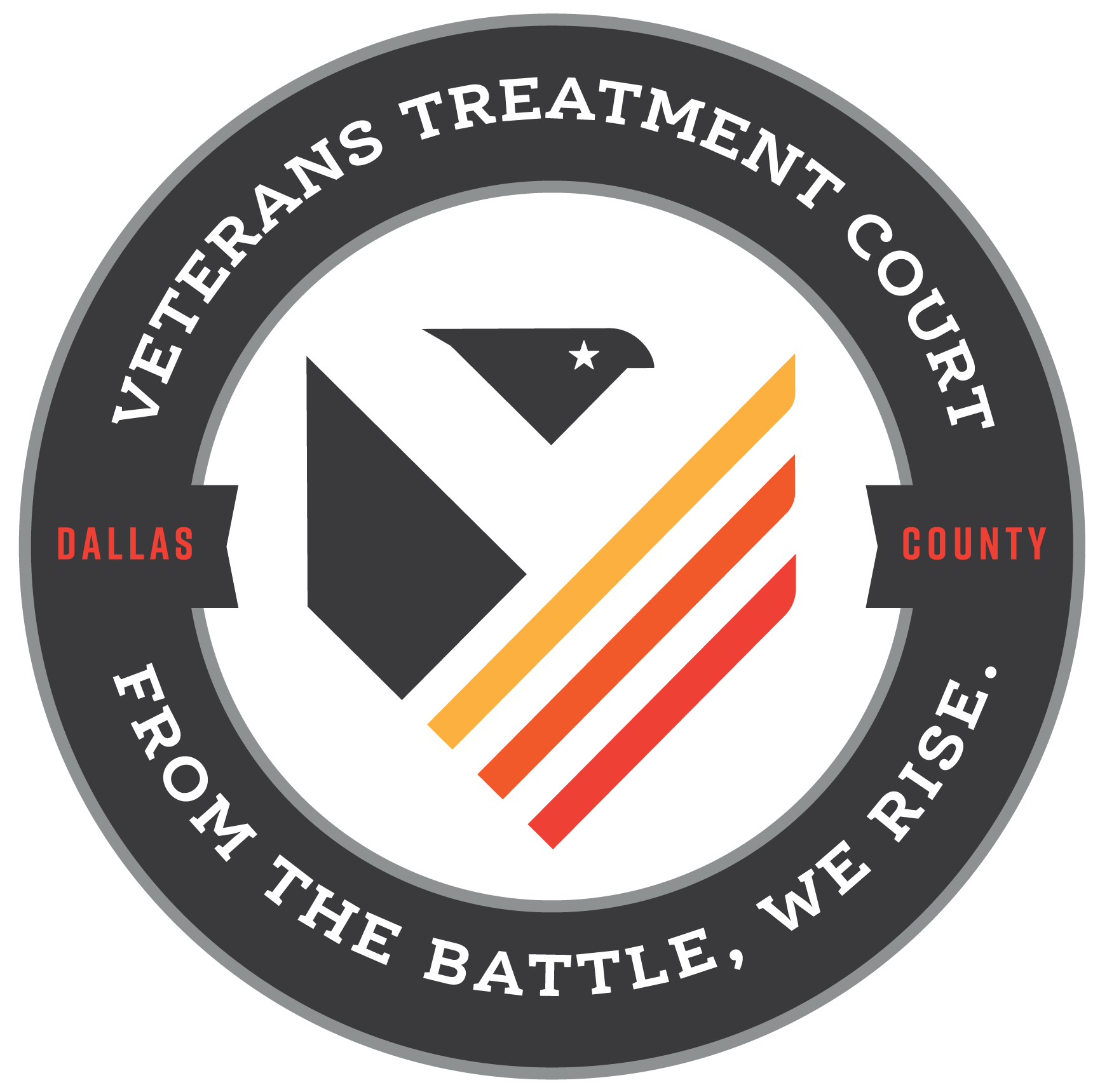
The bird within the "V" symbolizes freedom, and one's ability to free oneself from the restraints of trauma and addiction. The star is combined with the bird as a symbol of hope and guidance on the path to freedom.
The three stripes in the "V" are red, orange and yellow, representing the phoenix: a mythological bird that dies in a self-created fire and is reborn from the ashes. Here it symbolizes a veteran participant's path from crime, trauma and addiction to hope, healing and new life through treatment and transformation.
Court location & contact
Treatment court is free to the veteran, but life around it is not. The Warrior Defense Fund covers rides, paperwork, housing gaps and work gear so veterans can keep showing up.
Give to the Warrior Defense Fund